
A building supplies shop may sell individual fixings, packs and materials ordered by length. The website needs to make those differences clear before a customer adds anything to the basket. For a Laois supplier moving products online, start with the selling rules and delivery arrangements. Those decisions shape the product pages, order details and questions your team will need to answer.
Review the range and identify which products have a straightforward price and order process. Standard items may be ready for checkout, while a bespoke order may need a conversation first. Decide how customers should proceed where the specification or delivery cost needs confirmation.
Keep that distinction visible on the relevant product page. An enquiry route should explain what information to send and what happens next. For products sold directly, the customer should understand what they are ordering without having to arrange a separate discussion about a basic detail.
Describe whether the price relates to one item, a pack, a stock length or a customer’s chosen measurement. Keep pack size separate from the quantity selector. A quantity of two should clearly mean two packs where that is how the product is sold.
Show dimensions with their units and use consistent names for sizes and finishes. Make clear whether the displayed price includes VAT and what additional choices affect the total. Have the business approve the product information and pricing rules before the catalogue is imported or entered.
Where a customer enters a length, label the unit beside the field. Explain the available range and any minimum order or permitted increments. If more than one unit is offered, make the selected unit obvious and check that changing it produces the intended calculation.
Decide which choices belong together, such as a material, finish and selected length. Show any cutting charge or other applicable cost clearly. Use an understandable error message when an entry falls outside the available options, and let the customer correct it before proceeding.
Explain which products use standard delivery and which require separate arrangements. A small pack of fixings and a long material length may need different handling. Where delivery must be quoted, show that information before the customer reaches checkout and provide the appropriate contact route.
Describe collection arrangements where offered, including how the customer learns an order is ready. Keep preparation time distinct from transit time. Only publish delivery areas, charges and times that the business has confirmed for the products concerned.
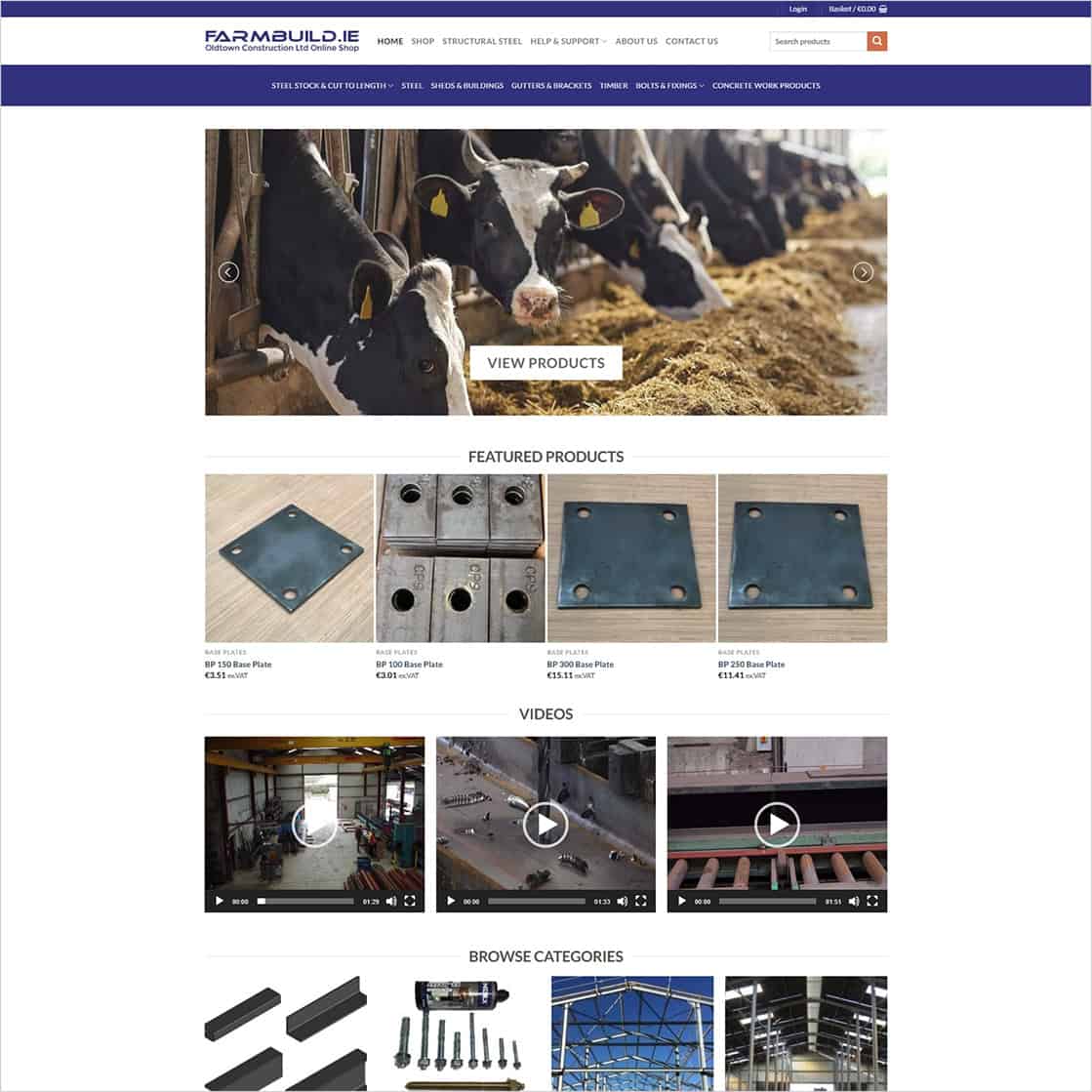
Farmbuild.ie is the online shop of Oldtown Construction Ltd., based in Oldtown, Cullahill, Co. Laois. We built the ecommerce website, which groups farm building and construction supplies into departments including steel, timber, bolts and fixings. Visitors can browse the range through product categories and product search.
The public catalogue illustrates different ways of ordering. One steel beam listing includes a unit selector and custom length options, while a fixing product is identified as a pack of 100. The Sheds & Buildings category also asks customers to contact the business for delivery charges.
For another Laois supplier, the useful lesson is to plan the ordering information around the product. A pack size, a chosen length and a delivery quotation each require a clear explanation. Prepare those details alongside the product name and photographs so customers know what needs selecting or discussing before they proceed.
Explore Farmbuild.ie, a custom length product example and the Sheds and Buildings category.
Check that the basket identifies the selected product, finish and measurements where applicable. Display the number of packs or pieces in a way that matches the product page. Customers should be able to review their choices and understand the line total before moving on.
Carry the necessary details into the order confirmation and the information your team uses to prepare the goods. Agree who reviews orders that need clarification. A custom length recorded on the product page is only useful if it remains attached to the correct order item.
Use product names and codes consistently so someone can look up an item they have bought before. Group related sizes or finishes in a way that makes the differences understandable. Provide a contact route beside products that commonly need clarification, with the product reference easy to identify.
Explain the product information your team needs when responding to a question. Keep published descriptions aligned with current supplier information. Where suitability depends on a project specification, provide a route to discuss the requirement rather than making a broad claim that a product suits every use.
Before launch, check representative journeys through the shop. Include a pack sold in multiples and, where offered, a configurable length. Check invalid entries as well as valid choices, then confirm that the selected options remain clear in the basket and order details.
Review the same journeys on a phone. Check that measurements and price labels remain readable and that fields have clear labels. Agree who updates pack sizes, prices and delivery information when the business changes its range or selling arrangements.
To plan your shop, explore our ecommerce website service for Laois businesses or contact Istech about your requirements.